Who among us hasn’t made the mistake of planting Mint in out garden? If you are like me, you learned the hard way that it will take over and frustratingly send runners in every direction. It is however, a delightful herb that makes salads and cocktails sing. A common solution is to plant it in the container in a raised bed or pot, I put mine to good use in an old chimney at the back of out property~ looks great and grows in abundance. It also happens to be a very simple plant to dry and to dye with. The following is a sketch of how to use Mint to create lovely natural color on fabric, I say sketch simply because I will not be using measurements. My intention is to allow you to experiment yourself and find a recipe …and a color that you love!
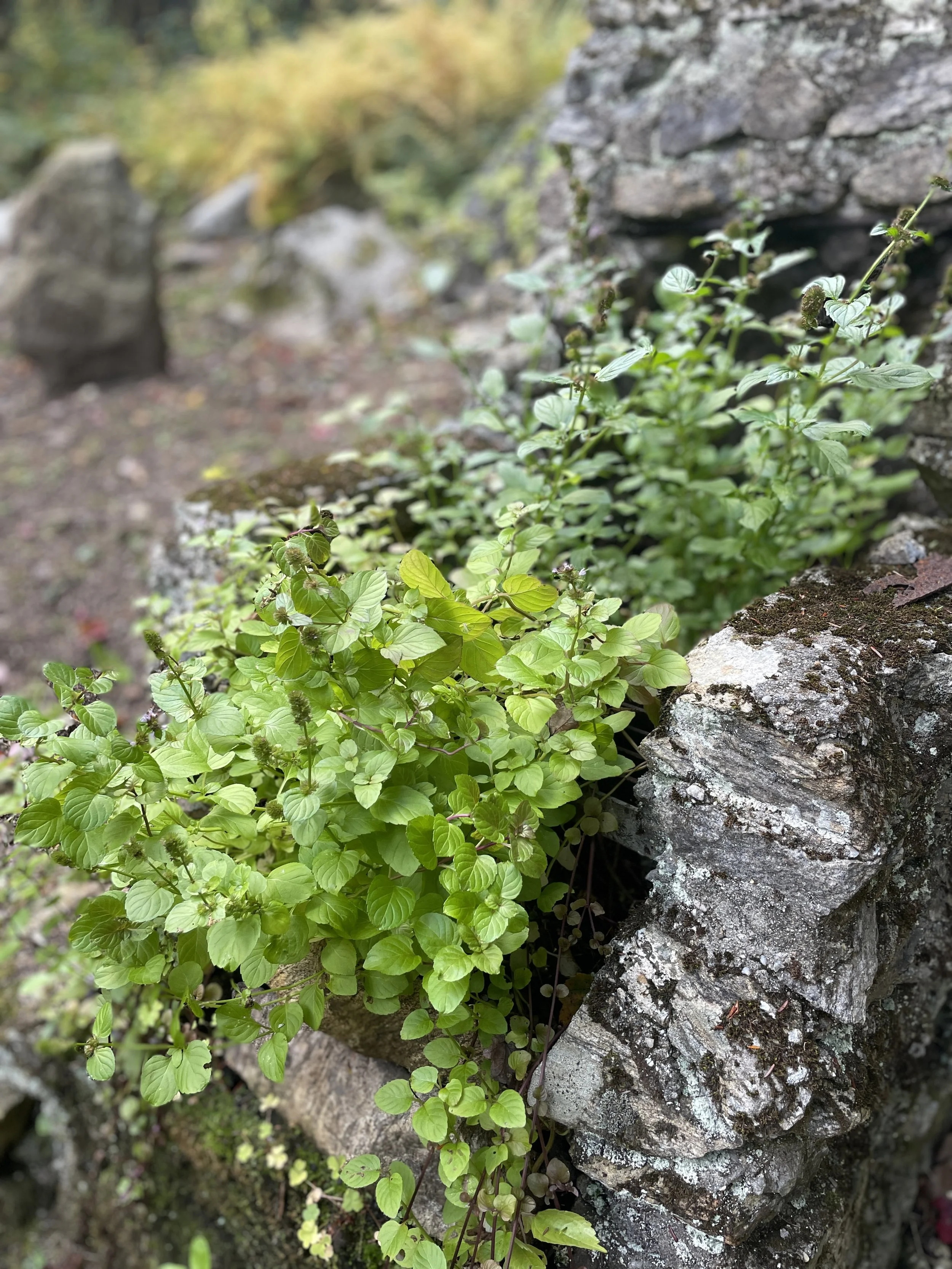
A few times each season I cut the Mint back and hang it to dry- I use my garage, but any cool dry space will do. For the sake of this experiment I used 2 silk bandanas. I used mordant appropriate for protein fiber, in my studio I use Aluminum Triformate. But here is where you can experiment a little, maybe use soy milk, or alum & soda, vinegar - it depends of course on the fabric. If you like to experimentation aspect of this as I do, picking up a book about natural dyeing is helpful. I have a variety of them in my studio, some of my favorites are from years past that I picked up as a vintage source on Ebay, lots of good ideas to experiment with!
Some Rules : Only use pots, measuring cups and utensils that are just for dyeing. You do not want cross contamination with food. Try Goodwill for some inexpensive pots and other materials. Use with proper ventilation- and a mask if you are measuring out powders. Always watch your pot while it is simmering.
Materials:
Mordanted Fabric ( your choice )
Dried Mint ( I used 2 large handfuls )
Aluminum pot, large enough for your fabric to move freely about
stainless steel bowl, strainer, and stainless steel slotted spoon
Additionally, since I will be shifting the color, Ferrous sulphate ( food grade Iron ) or you can make your own with a jar, H20 and some rusty bits.
A bucket of warm water and rubber gloves.
Lets’s begin!
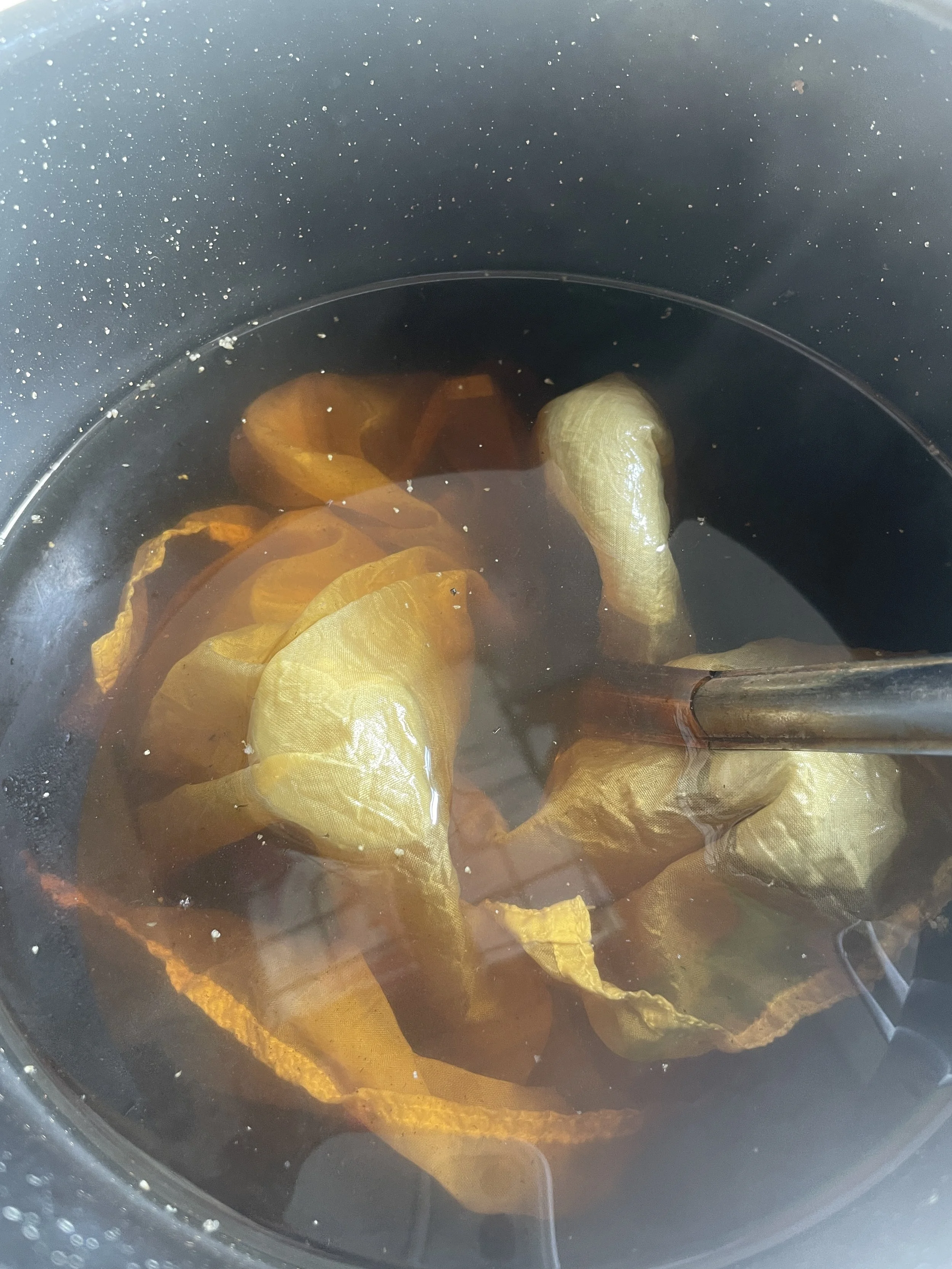
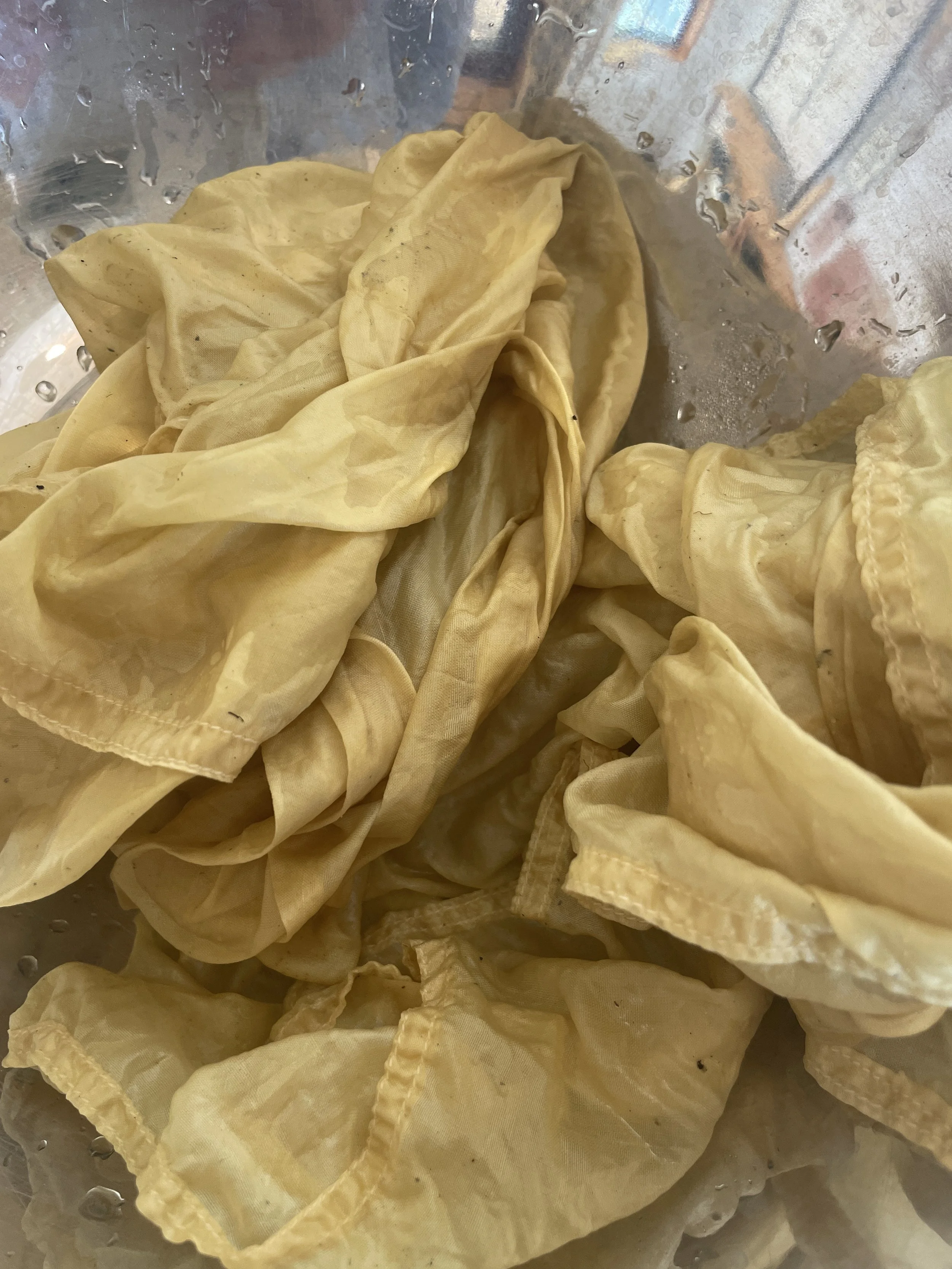
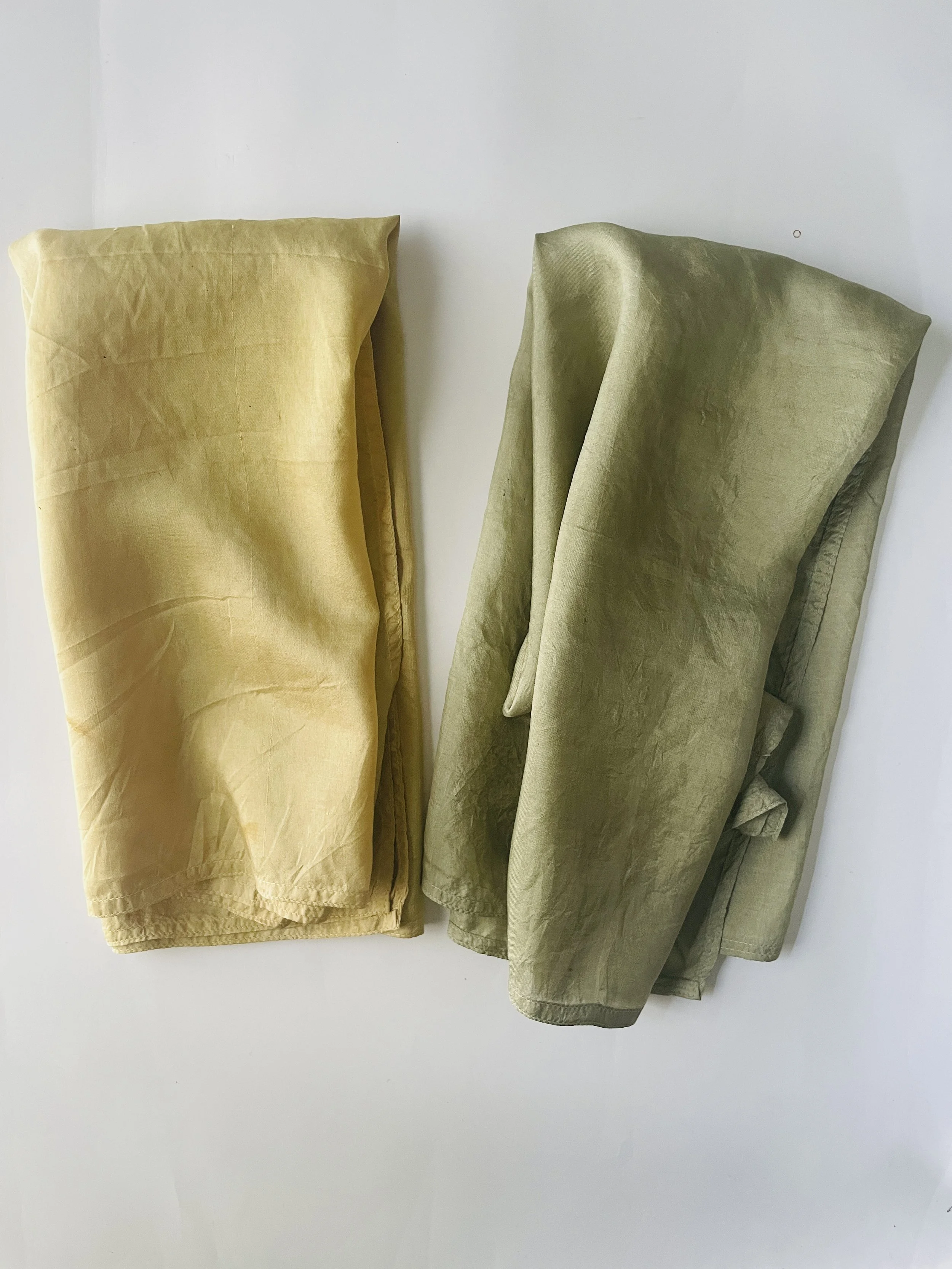
In a medium sized Aluminum pot simmer ( never boil ) the Mint for 1 hour and let it cool for a half hour in the pot with the burner off. Then strain the mint out and discard. On medium heat add the fabric to the pot. Stir slowly but frequently to avoid having the material settle on the bottom. When you achieve the proper depth of shade for you, remove the material to a stainless steel bowl and let it cool. Rinse with cool H2O and hang fabric in the shade to dry. You should achieve a lovely golden yellow.
If you choose to continue to shift color you may make an Iron bath, with a bucket of warm H2O and a small amount of ferrous sulphate ( iron ). Stir until visibly dissolved. Iron as a powder will turn anything black or grey so handle with care. Wearing rubber gloves, add fabric and stir, do not let the fabric stay in the bath for longer than 10 minutes. Rinse in a stainless steel bowl and hang to dry. Be sure to wear gloves, or your fingers and nails will turn grey. At this point your lovely golden yellow should be shifted to a beautiful shade of moss green!
Your Mint bath will be spent, and will likely grow mold quickly - so it’s best to dump it out. Your Iron bath may be sealed and reused many times if you wish.
Hope this was a fun experiment, that encourages you to try natural dyeing. The lack of measurements is intentional, as at the time I am not sharing my recipes. Also I think it’s just more fun if you play around and see what happens!
If you have any questions please leave them in the comments below and I will do my best to answer them. Writing this out is new for me so it’s possible I left something out, I look forward to hearing from you. Thank you for reading!